A Practice Plan to Get Better at Sudoku
A structured way to improve — choosing the right difficulty, drilling one technique at a time, and tracking real progress.
Doing one random puzzle a day barely moves your skill. Improvement comes from deliberate practice: solving at a level that stretches you, drilling the specific technique that is holding you back, and reviewing where you stalled. This guide turns "I play sometimes" into steady, measurable progress.
You do not need hours. Fifteen focused minutes a day, structured like this, beats an hour of aimless solving.
Solve at the edge of your ability
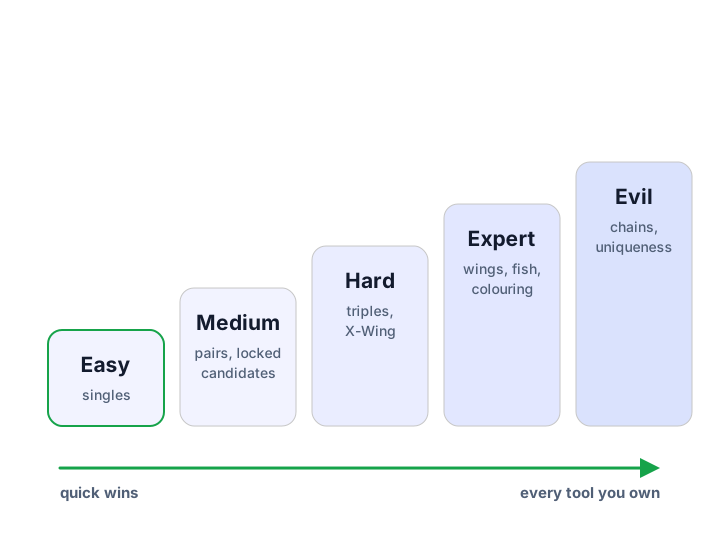
Pick a difficulty where you stall once or twice per puzzle — hard enough to force a new technique, easy enough to finish. Puzzles you breeze through teach nothing; puzzles you cannot start are demoralising. As your stall rate drops, step the difficulty up a notch.
- Too easy if you never pause — move up.
- Too hard if you cannot get a foothold — move down.
- Aim for one or two genuine "think" moments per grid.
Drill one technique at a time
When a technique keeps catching you out, stop solving full puzzles and drill it. Read the technique article, then deliberately hunt for that one pattern across several puzzles, ignoring everything else. Isolating a single move until you can spot it instantly is far more effective than hoping it sinks in through general play.
Review where you stalled
After a puzzle that fought you, look back at the point where you were stuck and identify which technique would have broken it. That one diagnosis — "I missed a pointing pair" — tells you exactly what to drill next. Keeping a mental (or written) note of your recurring blind spots is the fastest route to improvement.
Frequently asked questions
- How long should I practise each day?
- Fifteen focused minutes daily beats a long, distracted session once a week. Consistency and attention matter far more than total time.
- What difficulty should I practise at?
- One that makes you genuinely stall once or twice per puzzle but still finishable. That is the zone where you are forced to learn new techniques.
- How do I get past a plateau?
- Diagnose the specific technique that keeps stalling you and drill only that pattern across several puzzles until it is automatic, then return to full solves.
More guides
Further reading
- Strategy Families (technique progression to drill) — SudokuWiki.org
- Human Style Solving Techniques — HoDoKu
Practice online
Put it into practice on free puzzles with hints, notes and four difficulty levels.
Play Sudoku